Industrial Fire Prevention Systems: Why Fire Buckets Matter
An industrial fire can escalate within seconds, which is why a fire bucket remains one of the most essential and reliable tools in modern fire safety equipment systems. Widely deployed across factories, warehouses, fuel stations, and construction sites, fire buckets serve as a first-line fire protection solution for containing small-scale fire incidents before they spread. As part of a comprehensive industrial fire safety strategy, these simple yet effective tools support rapid emergency response, reduce workplace hazards, and enhance overall compliance with industrial safety standards.
This comprehensive guide answers:
What is a Fire bucket?
Why is it mandatory in industrial safety?
Which type is best for your facility?
How to install and maintain it properly?
Where to source high-quality fire buckets in India?
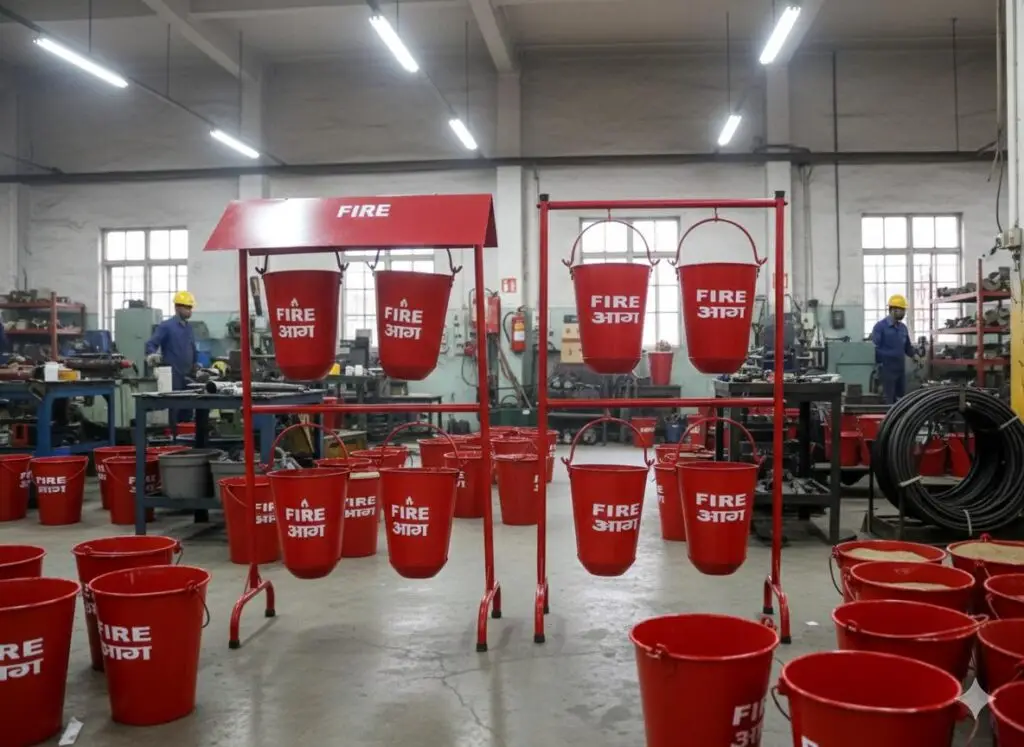
A fire bucket is a cylindrical metal container—typically finished in bright red—specifically designed to combat an industrial fire during its early stage. Commonly filled with sand or water, it functions as an immediate-response tool within broader industrial fire safety systems, helping to suppress small flames before they escalate into major workplace hazards. As a fundamental piece of fire safety equipment, it plays a crucial role in emergency preparedness and on-site fire prevention.
Key Characteristics
Constructed from heavy-duty steel for long-term durability
Powder-coated surface to enhance corrosion resistance in industrial environments
Mounted on wall brackets or dedicated bucket stands for quick accessibility
Clearly labeled for rapid identification during fire emergencies
In high-risk environments where an industrial fire can spread rapidly, a fire bucket serves as a vital first-response component within an integrated fire protection system. Though simple in design, it plays a strategic role in strengthening workplace fire safety, minimizing operational risks, and supporting regulatory compliance across industrial facilities.
Primary Functions
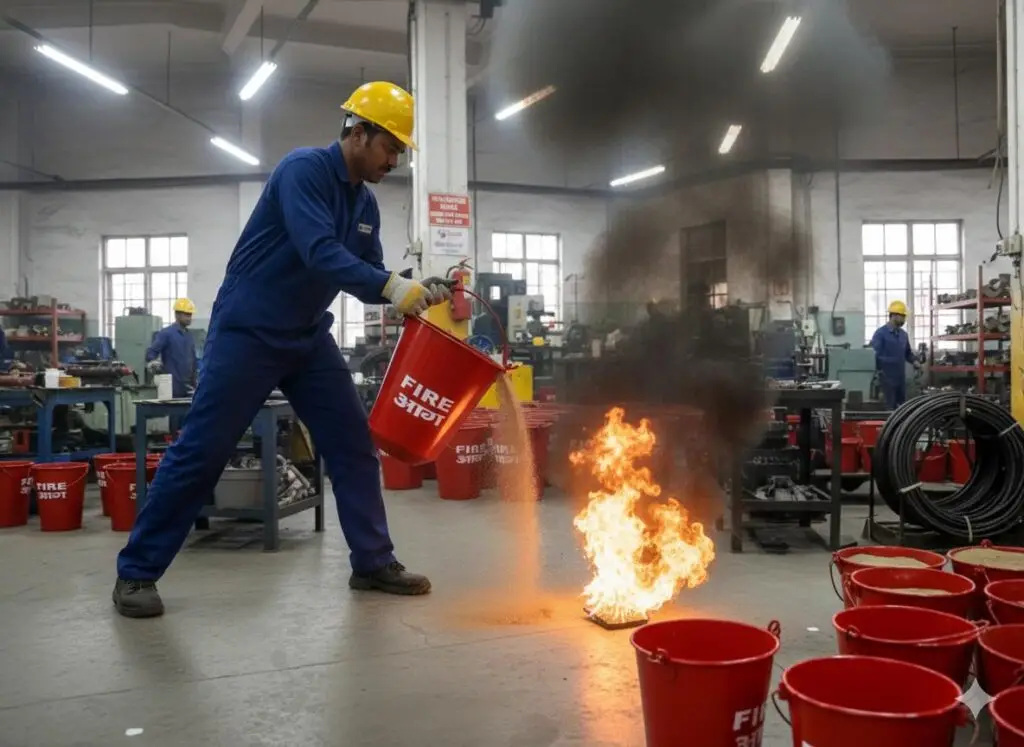
Provides rapid suppression of small flames before they intensify
Reduces the risk of fire escalation and secondary damage
Complements fire extinguisher systems as part of layered industrial fire safety equipment
Contributes to adherence with safety regulations and compliance standards
Industries Where Fire Buckets Are Essential
Manufacturing facilities with combustible materials
Chemical processing plants handling flammable substances
Oil depots and fuel storage terminals
Warehouses storing goods and packaging materials
Construction sites exposed to electrical and welding hazards
By integrating a fire bucket into broader industrial fire prevention strategies, organizations enhance emergency preparedness and create safer operational environments.
Types of Industrial Fire Buckets
1. Sand Fire Bucket
A Sand Fire Bucket is filled with dry sand and is primarily used to control oil and electrical fires. Sand helps smother flames by cutting off the oxygen supply, making it highly effective in fuel storage areas, machinery zones, and electrical panels.
2. Water Fire Bucket
A Water Fire Bucket is filled with water and is best suited for solid combustible fires such as wood, paper, and textile materials. It is commonly recommended for warehouses, storage rooms, and commercial facilities where Class A fire risks are present.
3. Powder-Coated Steel Fire Bucket
A Powder-Coated Steel Fire Bucket can be filled with either sand or water, depending on the fire risk. The powder coating enhances corrosion resistance and durability, making it ideal for outdoor industrial use, factory perimeters, and high-exposure environments
Proper installation of a fire bucket is critical to strengthening industrial fire protection measures within high-risk work environments. As part of a structured industrial fire safety plan, correct placement and maintenance ensure rapid emergency response, improved hazard control, and compliance with workplace safety regulations.
Installation Checklist
Position near high-risk zones such as fuel storage areas, electrical panels, and machinery sections
Securely mount on a durable fire bucket stand to ensure stability and quick access
Keep clearly visible with proper safety labeling for immediate identification
Ensure unobstructed accessibility at all times
Perform routine inspections as part of preventive maintenance and fire risk management protocols.
Effective maintenance of a fire bucket is essential to ensure reliable performance during an industrial fire emergency. As part of a structured industrial fire safety maintenance program, routine checks help preserve equipment integrity, maintain compliance with safety standards, and strengthen overall fire prevention strategies within industrial facilities.
Maintenance Guidelines for Long-Term Safety
Conduct weekly inspections to verify readiness and proper placement
Ensure the sand remains dry and free from contamination to maintain fire suppression effectiveness
Inspect for rust, dents, or corrosion that may compromise structural durability
Replace damaged or deformed buckets immediately to avoid operational failure
Clean surfaces regularly and repaint when necessary to maintain visibility, corrosion resistance, and compliance with workplace safety regulation
Adhering to compliance standards for a fire bucket is a critical component of any industrial fire risk management framework. Regulatory bodies require proper deployment of fire safety equipment to ensure effective emergency response, hazard mitigation, and alignment with occupational safety guidelines.
Compliance Factors
Maintain an adequate number of fire buckets based on facility size, operational layout, and assessed fire load
Ensure strategic placement near high-risk zones such as fuel storage, electrical installations, and production areas
Keep each fire bucket clearly labeled, highly visible, and easily accessible to support rapid response during fire emergencies
Meeting these industrial fire safety compliance requirements enhances workplace protection, reduces liability, and strengthens overall fire prevention systems.
.
When selecting reliable equipment for industrial fire protection, choosing a trusted manufacturer is essential. ANKUSH FIRE SAFETY SOLUTIONS is a Faridabad-based company with over 25 years of industry experience, specializing in the production of high-quality fire bucket systems and durable bucket stands. Their products are engineered to meet stringent industrial fire safety standards, ensuring dependable performance in high-risk environments.
Key Strengths
Robust powder-coated steel construction for enhanced corrosion resistance and long service life
Available in 1 kg to 2.5 kg capacity options to suit diverse industrial safety requirements
Efficient bulk supply network serving clients across India
Industrial-grade durability designed for demanding operational conditions
Trusted by factories and commercial facilities nationwide for reliable fire protection solutions
Partnering with an experienced manufacturer strengthens your overall fire prevention strategy, improves workplace safety, and ensures compliance with industrial safety regulations.
Case Study
Industrial Facility Fire Risk Reduction – Faridabad
After installing multiple sand-filled fire buckets from ANKUSH FIRE SAFETY SOLUTIONS
Fire response time improved
Minor fire incidents were controlled instantly
Safety audit compliance improved
Zero fire escalation cases recorded
Secure your factory and workplace with high-quality steel Fire bucket solutions from ANKUSH FIRE SAFETY SOLUTIONS.
Contact today for bulk orders and industrial fire safety support.
Frequently Asked Questions